.png)


Royale Exclusive game week 6 African Diaspora
- technbizznamibia

- Sep 28, 2019
- 3 min read


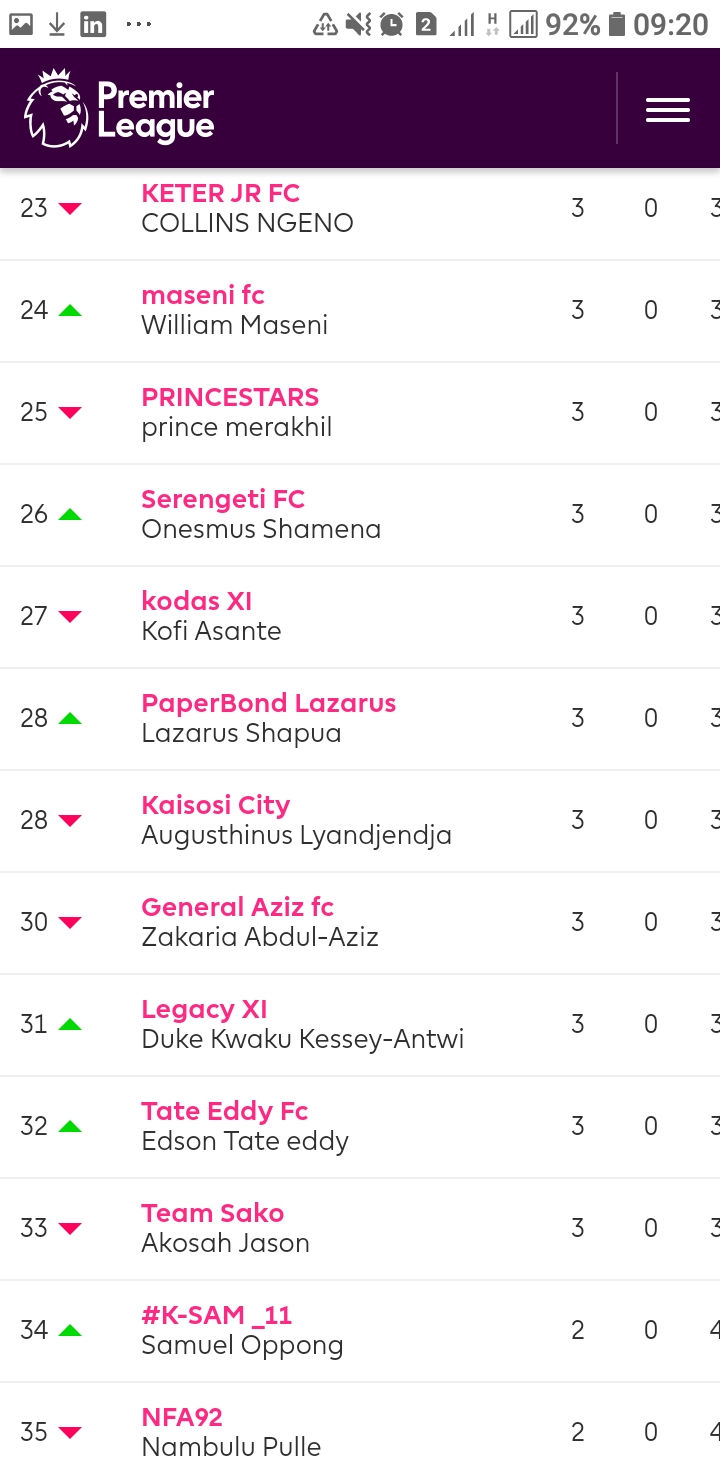
With gw7’s deadline imminent the low down of gw VI comes to you Exclusive. We begin with the Classic Royale where Luke Oconner’s Arsenal have opened a 10 point can between themselves and ever present this season Hidulika Fc. Newton fc and Hidden Agenda Fc both drop onto 353 points. Defending Champions Jaguar move into the top 5 with a gw6 points haul of 62. And rounding up the top ten is Cris K’s Alpha fc on 334 points.


In the Relegation battle the narrative is pretty straightforward; Can Hawks avoid relegation? Or will the Hunters or West Ham Lads Join them?


Royale Exclusive HvH time and its all about one team. Pamozi Fc have started like a house on fire..6 wins from 6…can anyone stop them?




Proudly Brought to you by #TechnBizzNam
A post shared by TechnBizz Namibia #Marketing (@technbizznamibia) on Sep 27, 2019 at 2:07am PDT
A post shared by Space Namibia (@spacenamibia) on Jun 17, 2019 at 5:38pm PDT
Samora Machel: The Beira speech The speech by Samora Machel (1933-1986) printed here in translation was made to a large crowd in a football stadium in Beira on 14 June 1975, a few days before Mozambican independence. The country‟s second city, Beira had a history as a centre of reaction in the later colonial period and in the war against FRELIMO. The speech was one of over thirty made in the course of an emblematic and little-studied journey that Samora Machel, soon to become Mozambique‟s first president, undertook between 24 May and 25 June 1975. He crossed the Rovuma River from Tanzania into Mozambique and moved slowly southwards to the capital, Lourenço Marques, in the extreme south. This „Triumphal Journey‟ symbolically set the stage for and culminated in the formal handing over of power by the Portuguese to FRELIMO. It was clearly intended to begin the work of emphasising unity in a country subject to extensive attempts at political division by the Portuguese colonial administration in the preceding decades, and still very much open to the threat of internal and external colonialist initiatives. The content of the speech is significant for what it represents in the sequence of political transition, and particularly for its relevance in analytically demolishing colonial social structure and presenting telling parts of FRELIMO‟s vision of the transformation process. The text is interesting as much for its paucity of overt theory as for its rhetorical and theatrical complexity. It adds little in the way of concrete data to our knowledge of the historical events of the period. It does, however, consolidate our knowledge of the intricacy of FRELIMO‟s approach to race, colonial class structure and internationalism at various levels, subjects that are basic to Machel‟s line of argument. The speech has never been published in any language, although a short extract was included in a Mozambican collection of political texts, and quotations appeared in contemporary newspaper accounts of Machel‟s visit to Beira. These published extracts were heavily „normalised‟, as was commonly done with transcripts of speeches when they appeared in print. However, in reconstructing the text for publication from a contemporary audio recording, we have followed minimalist principles, attempting to avoid prescriptive or normative correction of Machel‟s utterances. The text as presented inevitably represents choices and includes interpretations on our part, but other analysts are free to derive their own readings from this source.


Comments